Way back when I started working at WBJC in 1993, I quickly learned that, in addition to classical music, two of the most popular topics of conversation in my workplace were food and movies. These days, of course, we’ve added streaming various TV series to that list. Something that Jonathan and I have pondered more than once is the disappearance of classical music from films as either an activity or a profession for the characters. In some vintage comedies, the music is almost a character in its own right. Remember Dudley Moore’s lascivious maestro in “Foul Play?” The extensive use of Gilbert and Sullivan’s operetta “The Mikado” has always been a highlight of the film for me. How about “Micki and Maude”, in which Amy Irving played a professional cellist caught in a love triangle with Ann Reinking and Dudley Moore? Moore was a very talented musician in his own right and played piano onscreen several times, notably in “10” and “Arthur”. He also portrayed a composer/conductor who suspects his wife of cheating in “Unfaithfully Yours.” With regard to characters attending classical performances, would Way back when I started working at WBJC in 1993, I quickly learned that, in addition to classical either “Moonstruck” or “Pretty Woman” have been the same without their famous scenes set at the opera? I think not!
Classical music has been a staple of movie soundtracks for decades, used in brilliant – and sometimes unexpected – ways in films like “The Shining”, “Platoon”, “The Big Lebowski”, and “2001: A Space Odyssey.” However, the way the art form is used and represented in films is sometimes a bit problematic for those of us who love it. Back in the day, it was often referred to as “that longhair stuff” to indicate that those who performed or listened to it were elitist or otherwise set themselves apart from the population at large. It’s also been associated with Bond villains in the films “Live and Let Die”, “The Spy Who Loved Me”, “Moonraker”, and “Quantum of Solace.” In “The Living Daylights”, Bond himself treats his innamorata’s priceless cello in a cringeworthy manner by commandeering its case as a sled and using the instrument itself to steer down an Austrian mountain. Wonder what Yo-Yo Ma thought if he saw that movie?
Soundtrack-wise, classical music is doing pretty well on the small screen – two TV shows that we’ve binged during the pandemic have used it in ways I find particularly effective. Of course, one expects “The Crown”, a show about the British royal family, to include classical music and Sarah Bridge, the show’s music supervisor, incorporates a good deal of it along with period-appropriate popular tunes. When we watched “Russian Doll”, however, I wasn’t prepared to have Beethoven appear on the soundtrack along with Harry Nilsson, Depeche Mode, and other current and retro pop acts, but I was very happy about it! Kudos to music supervisor Brienne Rose for that.
Wouldn’t it be great if there were some recent movies and shows that showed average people performing or enjoying classical music? Well, there is at least one – the teen comedy “Metal Lords”, which was released this year and features a character who’s a classically trained cellist. She’s not treated as weird or stodgy by her peers, so even though there’s a lot more rock than Bach in the film, it was very refreshing to see classical music getting some respect in a movie about high school students. Is this the start of a trend? Maybe, maybe not, but a DJ can dream.
If you’ve noticed classical music in a recent film or TV show, I’d love to hear about it – my email is dneal@bccc.edu
On the Big Screen, Baltimore and Beyond: the 2018 Maryland Film Festival
The 2018 Maryland Film Festival runs from May 2-6 at various locations in Baltimore’s Station North neighborhood. Recently, I spoke with Jed Dietz, Founding Director of the Maryland Film Festival and President of the Producer’s Club of Maryland, about this year’s offerings. They include a Japanese silent film long thought lost, but newly restored and being presented at the festival with live orchestral accompaniment by the Alloy Orchestra, a documentary about Mr. Rogers, and four films in which Baltimore plays a prominent role.
Here’s the extended, web-only version of our chat:
And here’s the broadcast edit:
Opera Goes to the Movies, 1935-Style
It’s less and less common to see classical music represented in popular culture these days, especially in a positive sense, so imagine my delight when I recently saw that Turner Classic Movies was airing Love Me Forever, a 1935 film starring Metropolitan Opera soprano Grace Moore. I’m rather ashamed to admit I didn’t know Moore’s work prior to seeing the film – I just happened to be browsing TCM’s broadcast schedule, noticed the words “opera singer” in the plot summary, and set my DVR to record.
Moore was born in Mary Willie Grace Moore in Slabtown, Tennessee on December 5, 1898. She briefly studied music in Nashville before moving to Washington, D.C. and then to New York, where she got her first professional singing gig at the Black Cat Cafe in Greenwich Village. She performed in musicals and revues by Jerome Kern and Irving Berlin during the 1920’s, then moved to Paris to study opera. Moore made her Metropolitan Opera debut as Mimi in La Boheme on February 7, 1928. She must have made quite a hit as she went on to reprise the role at Covent Garden and sang sixteen seasons at The Met! Her repertoire featured French and Italian operas, notably the title role in Charpentier’s Louise, her favorite opera and considered by many her finest portrayal.
A number of opera singers were drawn to Hollywood after the advent of talking pictures, and Moore was among them. She made her screen debut in the 1930 film A Lady’s Morals, playing 19th-century soprano Jenny Lind. Later that year, she co-starred with Met colleague Lawrence Tibbett in New Moon, a screen adaptation of The New Moon by Sigmund Romberg. Following a four-year hiatus from pictures, she played a small-town girl who aspires to be an opera singer in One Night of Love – art imitating life? – a role that garnered her an Academy Award nomination for Best Actress. Sadly, she was killed in a 1947 plane crash near Copenhagen’s airport when she was just 48 years old.
Love Me Forever is quintessential Depression-era entertainment in that it features characters who lose their fortunes, romance between people from vastly different backgrounds, class struggle, and visual escapism via absolutely stunning sets and costumes. Designer Robert Kalloch must have had a field day working on this project – the dress Moore wears when she sings Quando me’n vo’ in a nightclub is the epitome of opera costuming a la 1930’s Hollywood.
Moore plays society woman Margaret Howard, well-born but broke due to the Depression. Forced to auction off her personal belongings and family heirlooms, she avoids watching the sale, choosing to play the piano and sing in the room next door instead. Gangster Steve Correlli (wonderfully played by Leo Carrillo) and his right-hand man Luigi (Luis Alberni) are in attendance at the auction, intent on buying up the Howard family’s antiques. An avid music lover, Correlli hears Margaret’s voice and is instantly smitten. He gets her a job as a nightclub singer, then decides she’s meant to be an operatic soprano and opens a fancy nightclub as a showcase for her. Some bigwigs from the Met are persuaded to stop in at the club, they’re bowled over by Margaret’s performance, and suddenly, she’s hired to sing Mimi at the Met! (I’m sure my friends who are actively pursuing full-time opera careers would love a break like that.)
All doesn’t go smoothly, however – Steve has fallen in love with Margaret, but she’s announced her intention to marry Boston socialite Phillip Cameron (Robert Allan.) In despair, Steve continues to champion Margaret’s career, but drinks and gambles in an attempt to soothe his pain. Love Me Forever contains some opera-worthy plot twists and is a tale of love – not only the romantic sort, but of friendship – that’s well worth watching.
Music From Visconti Movies 10-18-15

7:00 PM
Christoph Willibald Gluck Orfeo ed Eurydice: Che faro che Eurydice Teldec 98418
COND Donald Runnicles
ORCH San Francisco Opera Orchestra
SOLO Jennifer Larmore, mezzo-sopran
7:04 PM
Nino Rota The Leopard: film score CBS/Sony 63359
COND Riccardo Muti
ORCH La Scala Philharmonic Orchestr
7:27 PM
Gustav Mahler Symphony No. 5: Adagietto DG/Archiv 445486
COND Leonard Bernstein
ORCH Vienna Philharmonic Orchestra
7:39 PM
Nino Rota Rocco and his Brothers : Suite CBS/Sony 63359
COND Riccardo Muti
ORCH La Scala Philharmonic Orchestr
7:48 PM
Gustav Mahler Symphony No. 3 in d RCA/BMG 63469
COND Erich Leinsdorf
ORCH Boston Symphony Orchestra
SOLO Shirley Verrett, mezzo-soprano
Oliver Stone’s Untold History
Oliver Stone is no stranger to controversy. His trilogy of Vietnam war films, Platoon, Born on the Fourth of July and Heaven & Earth; his take on the Kennedy assignation in JFK; the violence of Natural Born Killers; his “greed is good” indictment in Wall Street, his portrayal of Turkish people in Midnight Express, and his movie portraits of Nixon and W have garnered as much vehement criticism as adulation (the latter category including three Academy Awards). Aside from the controversy surrounding his films, there are his drug arrests, his praise and stated admiration for Hugo Chavez, and outspoken opinions that he might later have wished unsaid. So, it comes as a bit of a surprise to discover that, in person, he gives the impression of being quite mild.
His latest project is a 10-part television series (with a 750 page companion book) called The Untold History of the United States, which begins airing on Monday night. Here’s a sampling of some of the episodes/chapters: World War II: Who Really Defeated Germany?; The Cold War: Who Started It?; JFK: “The Most Dangerous Moment in History”; Nixon and Kissinger: The “Madman” and the “Psychopath”—you get the picture. Well, the University of Baltimore hosted a screening at The Charles of one of the episodes, The Bomb: The Tragedy of a Small Man last Thursday, and there was a panel discussion afterwards, which included Oliver Stone, sporting a bright red woolen scarf, and his co-writer, the historian, Peter Kuznick.
Oliver Stone, while a little bit irritated that the microphones weren’t working properly, came across as anything but the firebrand one would suspect from the controversy that has surrounded him. He was softly spoken, thoughtful and self-examining. He said, for instance, in response to a question about the difference between directing movies and documentaries, that had he known how difficult it was to work with documentary material, he would never have begun the project. Both he and Peter Kuznick said they wanted to do this for their children “and the better world that they and all children deserve.” Obviously he believes deeply and passionately in trying to make a difference and to make people think beyond what they are told to think, and this gives him an unexpected warmth. When I plucked up the courage to ask him to sign a copy of his book for me, he took a moment to make eye contact, lightly touch my arm, and make a comment about the ferocity of my fountain pen as he gouged a hole in the page with the sharp nib. It seemed remarkable to me that he would take the trouble to make a connection, slight as it was, given the thousands of people who must clamor for his attention all the time. It is always a pleasure to see the humanity in a person who has achieved a level of fame—albeit fame through notoriety, as has sometimes been the case with Oliver Stone. I have a feeling that his latest project, his Untold History of the United States, will stir up more of both.
Top 5 – Halloween Movies (Part 2)
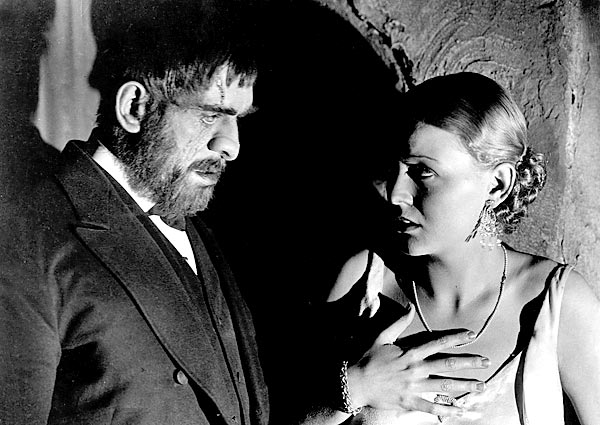
4) The Old Dark House, 1932, directed by James Whale, starring Boris Karloff, Melvyn Douglas, Charles Laughton, Gloria Stuart, Ernest Thesiger, Raymond Massey, and Elspeth Dudgeon
The most acclaimed horror films from the early days of sound were those produced by Universal Pictures in the early 1930’s: Frankenstein, Dracula, The Mummy, The Invisible Man, and The Bride of Frankenstein
. Even those who have never seen them have images from these films haunting their subconscious. Three of these titles were directed by James Whale, but one of the most memorable in the series also directed by Whale is not nearly as well known, the 1932 dark comedy The Old Dark House, based on a novel by J. B. Priestley.
Like many dark comedies, some viewers don’t “get it”. The movie did poorly at the American box office upon its initial release, in spite of a publicity campaign that sought to capitalize on Boris Karloff’s success in Frankenstein the previous year. In England, however, the film was a smash hit. For many years, however, all copies of the movie disappeared, and it was thought for decades to be a lost film. In the 1960’s, one of James Whale’s director friends nagged Universal Studios to seek out the lost elements, and convinced the George Eastman House to restore the film in 1968. Since then, in the words of Karl Williams of the Allmovie Guide, it has attained “grail-like status”.
The story takes place in the Welsh countryside, beginning as in many classic “old dark house” movies with a group of travelers seeking shelter from a storm in a gloomy house. Among the travelers are actors Melvyn Douglas and Charles Laughton, future Oscar winners, and Raymond Massey, a future Oscar nominee. Massey’s wife is portrayed by Gloria Stuart, who would become the oldest Oscar nominee in history sixty-five years later for Titanic. With such a talented cast, you would think they would be the focus of the film, and indeed there is enough back story and plot twists among them to make an entirely separate movie.
But the real stars of the film are the bizarre family by the name of Femm who live in the house. That’s right, Femm. If ever a film had a gay subtext, it’s this one. (Director James Whale was openly gay at a time when that was rare in Hollywood.) Horace Femm is dour and anxious. His memorable line, delivered deadpan with outstretched fork, is “Have a potato.” There is talk of the mysterious death of a sister, and we are left to wonder how. Horace’s sister Rebecca Femm is a fire and brimstone religious fanatic. When attractive Gloria Stuart strips to her slip in her bedroom, Rebecca chastises her for the sinful sexuality of her young body. (“Your silk gown will rot, and your body will rot too!”) And as if to emphasize the point she pokes her between the breasts (even in the days before the Production Code, this scene could only be done in silhouette), and in case we missed it, Stuart calls her out for the violation. Boris Karloff plays the drunken butler Morgan, who more overtly pursues the scantily clad Ms. Stuart. As we ascend to the upper floors of the house, we meet the bedridden patriarch of the family, 102 year old Sir Roderick Femm, who is portrayed by the sixty-year old actress Elspeth Dudgeon (listed in the credits as “John Dudgeon”), in a truly Dickensian performance. Indeed, it seems that each new floor in the house brings a heightened level of weirdness.
But one thing every family member agrees upon is that the most dangerous person in the family is Horace and Rebecca’s brother Saul, who must always be kept under lock and key. The joke is that, when we finally meet Saul (minor spoiler alert), he seems to be the most normal member of the family. But maybe not.
This is not the old dark house so frequently seen in ghost stories, with looming Victorian architecture, ornate wood carvings, and shiny mahogany. (RKO had a stairway set that was reused from film to film, and seemed to haunt us just by standing there.) I often wonder if I am missing something due to diminished print quality over the years, because The Old Dark House seems as if it were filmed in a dark closet with an invisible elevator, the better to see those incredible faces. A truly strange film.

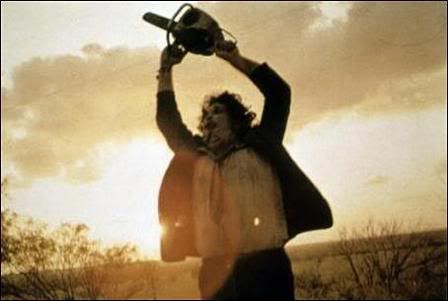
5) The Texas Chainsaw Massacre, 1974, directed by Tobe Hooper, starring Marilyn Burns, Gunnar Hansen, and Edwin Burns
I resisted seeing this movie for years. I recall seeing the television promo when the film was new. There were barely any visuals; if memory serves only a split second shot of a shadowy hand lifting the saw, followed by a black screen, the sound of a chainsaw, and an ominous announcer intoning the title. My reaction was, “Yuck!”
In the early 1980’s, after buying my first VCR and renting movies several times a week, a clerk at a local video store, who himself was an aspiring filmmaker, kept coaxing me to watch The Texas Chainsaw Massacre, which he contended was a cinematic masterpiece. Finally one night I capitulated, and got myself in the mood for “an evening of gore”. The truth is, the film is barely gory at all. Macabre yes, but gory no. Tim Burton’s Sweeney Todd is infinitely gorier. You never once see a chainsaw tearing flesh or drawing blood. But the film is scary as hell. If you’re in the mood to have the pants scared off you, I highly recommend this movie.
The film is actually a dark comedy about a three generation family of slaughterhouse workers who can’t break their old habits after their local business closes. Four teenagers have the misfortune to get lost and happen upon their surreal house. The first half of the film we follow the young people and observe how obnoxious and irritating they are. The second half, well you can imagine.
The Texas Chainsaw Massacre is one of three films with the dubious distinction of creating the template for the modern horror film, in particular the “slasher” movie. (The other two are Night of the Living Dead (1968) and Halloween (1978).) All three of them are less gruesome than the films they influenced, and all three have their own unique cult film status. Tobe Hooper would be tapped by producer Steven Spielberg to direct a more family oriented horror classic, Poltergeist (1982), in which the melding of humor and ever accelerating terror is worthy of the creator of Leatherface and his clan.

And I promised my wife to include a favorite film of hers as a bonus:
The Uninvited, 1944, directed by Lewis Stone, starring Ray Milland, Ruth Hussey, Donald Crisp, Gail Russell, and Alan Napier
Once again, we are in an old dark house, this time on the rocky coast of England, with Milland and Hussey playing a brother and sister, who think this will be an ideal spot for brother to pursue his career as a composer. Very quickly they sense that they are not alone, and the townspeople confirm their suspicions that there is a spirit within the house that will not rest until its earthly cares are resolved.
There’s an endangered maiden, a father in denial about his past, and characters who are not what they appear to be. And I guess I have to admit to a gay subtext here as well, in a character obviously influenced by Mrs. Danvers in Alfred Hitchcock’s Rebecca, who has an unhealthy obsession with a dead woman. And like the film noir Laura, it even originated an American pop standard, this one Victor Young’s “Stella by Starlight”.
And that’s all I’m going to tell you. Watch this movie if you want to see an old fashioned ghost story without a whiff of gore or violence, but plenty of spookiness and romance, terrific performances, and a great plot twist at the end.

Happy Halloween.
Top 5 – Halloween Movies (Part 1)
Since Halloween is near, I thought I would share with you my top five favorite horror movies. We certainly have come a long way since I was a child in terms of what is permissable for public viewing. The other day I saw the rotting corpse of a zombie from The Walking Dead on the front page of the Baltimore Sun TV section. When I was a young child, something as tame as the wicked queen from Disney’s Snow White and the Seven Dwarfs gave me nightmares for years. At age six, walking down the Halloween costume aisle of the present day Rite Aid would have sent me screaming from the store. Of course, a few years later, around the age of nine or so, I could not get enough of horror movies, usually of the low budget Ed Wood variety, since those were about the only ones shown on television at the time. Oh what I would have given to see the original Boris Karloff/James Whale Frankenstein back then.
As I commented in my previous blog “Top 5 -Not”, “once I make up my mind, I don’t have five things but twenty”, and so it was the case here. But let me share with you the first five that came to mind:
1) I Walked With a Zombie, 1943, directed by Jacques Tourneur, produced by Val Lewton, starring Frances Dee, Tom Conway, and James Ellison
Never did a more lurid title grace such an elegant film, and even that is part of its charm. This tale of voodoo, sexual jealousy, and a present haunted by the past on the Caribbean island of St. Sebastian is amazingly based on the book Jane Eyre.
Val Lewton is one of the only acknowledged film auteurs who was not a director but a producer. In the 1940’s, RKO assigned him to produce a series of low budget B horror movies, all clocking in at less than eighty minutes. The studio expected escapist cheap thrills, but instead they got literate, psychologically complex tales of the supernatural, photographed with stunning chiariscuro of shadow and light, with one foot in modernism and the other foot in the nineteenth century English novel.
As in most Val Lewton films, the central character is a woman (and an intelligent and independent woman at that). Lewton researched the voodoo scenes very carefully, and having seen an actual voodoo ceremony years ago at the Smithsonian Institution I can attest to their accuracy (although they are depicted with such dignity that they practically resemble a Sunday church picnic, and I mean this as a compliment). Lewton is also admired today for his avoidance of racial stereotypes in his Afro-Caribbean characters (only the creepy zombie Carrefour, played by a former basketball player, is anything resembling a “type”, yet even he is ultimately poignant). And he always leaves open the possibility that the horror is in everyone’s minds, almost never actually showing a monster or a ghost but leaving them to our imaginations.
In one of my favorite scenes, the calypso singer Sir Lancelot is entertaining customers at an outdoor cafe with a song about a local love triangle, when he is informed that the sugar planter described in the song is sitting at a table with the pretty young nurse who has come to care for his brother’s comatose wife. He apologizes profusing, swearing “I don’t know who wrote such a song.” But later after dark, when the sugar planter is too drunk and unconscious to notice, Sir Lancelot emerges out of the shadows with his guitar like a Greek chorus to sing one final verse to the listening nurse: “The brothers are lonely, and the nurse is young, and now you have seen that my song is sung.” For me, it is one of the most haunting scenes in the history of film.
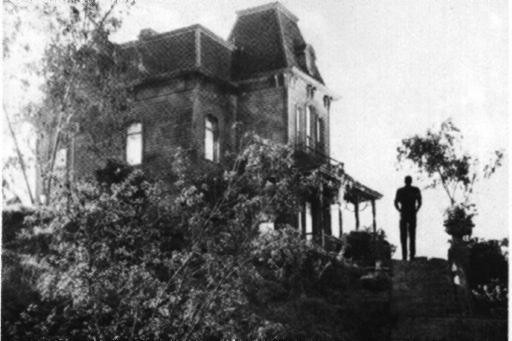
2) Psycho, 1960, directed by Alfred Hitchcock, starring Janet Leigh, Anthony Perkins, and Vera Miles
One of the films that upped the quotient of graphic violence and gore in popular culture to this day, Psycho is a true cinematic masterpiece. Indeed, one of the great works of art of the twentieth century in any form. It is pleasing to be able to say this and know how many cultural mavens will agree. When I was a child, Alfred Hitchcock was known as “the master of suspense” (a not inaccurate description that one may hear at times even today), crafting brilliant escapist thrillers for a mass audience. Then the French got hold of him, particularly Francois Truffaut and
Claude Chabrol and their fellow film critics, soon to be directors themselves, at Cahiers du Cinema, the French magazine of analytical film discussion. They declared Hitchcock to be not merely a highly talented entertainer but a great artist, deserving a place alongside James Joyce, Picasso, Stravinsky, and other twentieth century masters.
The idea has taken hold to such an extent that I can barely mention Hitchcock’s name these days without being greeted by reverential responses such as “great artist” or “profound psychological insights”. I could not agree more. Years ago I attended a screening of the silent version of Alfred Hitchcock’s early film Blackmail at the Maryland Film Festival. In discussion with some audience members afterwards, someone asked why Hitchcock began the film with a cops and robbers chase that had nothing to do with the story. I ventured the idea that he wanted to grab the audience’s attention in the opening moments with an action sequence. A young man politely disagreed, saying that Hitchcock was too great an artist to use such a crass device. With what I hope was equal politeness, I gave him examples of many revered artists who were not beyond catering to their intended audience from time to time. (The rigourous and cerebral Japanese director Yasujiro Ozu, for example, made sure the labels of whisky bottles faced the camera because a liquor company had donated them to him.) For me it makes them even more loveable. After all, why can’t an artist be both genius and crowd pleaser?
At any rate, Psycho is both. Janet Leigh’s half hour car ride at the beginning of the movie, in which every banal and inconsequential event is somehow frightening, must be one of the most brilliantly sustained sequences any director has ever created. Not to mention the legendary shower scene, studied in film classes to this day. As for pleasing its audience, a film scholar once told me that when United Artists re-released Psycho a few years after its premiere, it became the highest grossing black and white film since The Birth of a Nation. And to quote one of my TV viewing college dorm mates, upon seeing Vera Miles’ climactic confrontation with Norman Bates’ mother, “Cooool!”
3) Kwaidan, 1964, Japan, directed by Masaki Kobayashi, starring Renaro Minkuni, Michiyo Aratama, Keiko Kishi, Tatsuya Nakadai, Katsuo Nakamura, Takashi Shimura, and Kei Sato
Masaki Kobayashi was known as a humanist filmmaker, denouncing the abuses of feudalism, in both contemporary stories such as The Human Condition and period pieces like Hara Kiri. But his most popular film is an exquisite anthology of four unrelated ghost stories with no particular socially conscious theme, featuring major Japanese film stars, filmed in wide screen with some of the most beautiful technicolor images ever seen. The four stories are ironically not Japanese at all, but based on stories by the late nineteenth century author Lafcaido Hearn, born in Greece of British and Greek parentage, who lived for many years in Japan, and drew upon several Japanese folk stories for his adaptations.
The first story, “The Black Hair” tells of a samurai during the middle ages who leaves his beautiful devoted wife to marry for money, but lives to regret his selfishness. The second story, “The Woman in the Snow”, concerns a handsome young man who encounters a female vampire during a deadly storm in an icy wilderness (remarkably, this haunting tale was cut from the original
American release version, but has since been restored). The third and longest story, “Hoichi the Earless” relates the experiences of a blind Buddhist monk whose playing of the biwa (Japanese short necked lute) and eloquent narrative singing inadvertently calls up the spirits of a long deceased clan slaughtered in a famous naval battle (depicted in graphic detail in the opening minutes of the segment). And the final story, “In a Cup of Tea”, is what a friend of mine called the “most post-modern” of the four. A writer sees the face of a samurai in a cup of tea and “swallows his soul”. (If I had to cut one of the stories, it would be this, but it makes for a nice, offbeat ending, after its three more dramatic predecessors.)
The film contains many horrifying and graphic images, so be forewarned, yet it is an undeniable art film, with the stately pace of the best Japanese films from the 50’s and 60’s, and lengthy periods of suspenseful buildup whose screen time far exceeds the horror. In 1960’s it must have seemed quite gruesome, but younger viewers accustomed to modern horror movies may not find the film too gory but not gory enough. And if you are one of those who constantly complains on the Internet Movie Data Base postings about movies that are too slow, stay away from this one. For those like myself, it induces a pleasing trancelike state with its immersion in pure sensual beauty, making the scares all the more terrifying when they come.
With the exception of a few brief scenes obviously filmed out of doors, Kobayashi filmed Kwaidan in an airplane hanger so he could stylize the settings. Horizons at sunset are deliciously artificial in their lurid colors. In one story, large painted eyes appear periodically in the sky. The music is by Toru Takemitsu, a famed Japanese classical composer, who uses traditional Japanese percussion instruments to create eerie sound effects in a truly experimental score. The opening credits alone are a tour de force, resembling a lava lamp, like different colored inks dispersing through water, but processed on a white background.
Kwaidan won the Special Jury Prize at the Cannes Film Festival and received an Academy Award nomination for Best Foreign Film. Japanese horror movies have been undergoing a Renaissance in recent years, but none of them are as sumptuous as this one.
To be continued …

Frankenweenie – review!
“This is what Tim Burton is GOOD at!”

When I left the theater, I felt like Burton had returned to his roots. I was a fan of Edward Scissorhands, Nightmare Before Christmas, Sleepy Hollow and Beetlejuice… but in recent years I was underwhelmed with the Corpse Bride and Sweeney Todd, and outright repelled by Charlie and the Chocolate Factory and Alice in Wonderland.
I had all but written off Burton’s films when Burt Shapiro reviewed Dark Shadows and inspired me to rent it on VOD. Both my husband and I enjoyed it for what it was: campy and weird (which WAS the original show!)
So when we were deciding on a movie recently, I hopefully picked Tim Burton’s Frankenweenie. I didn’t know at the time, but this was a resurrection (yeah, I did that on purpose) of a 1984 short film by Burton that parodies the 1931 Frankenstein. He was literally returning to his roots!
Frankenweenie is the story of Victor Frankenstein and Sparky, an odd boy and his canine pal. Victor’s day-to-day life is going to school with children who look like they stepped out of period horror movies themselves and making home horror/monster movies starring his pooch. After Sparky is struck and killed by a car, young Victor’s life seems bleak until his new science teacher inadvertently inspires him to resurrect his dead dog.
Once his secret is discovered by the other classmates, they all set out to raise dead pets thinking Victor is poised to win the science fair. Comedy ensues! (Shelley the Turtle and Colossus face off in one of the funniest moments of the film.) There was plenty of movement and suspense in this film to keep fidgeters like myself engaged for the entire 87 minutes.

The stop-motion film is entirely in black and white, and has some pretty clever writing. The odd-ball characters add a layer of comedy that, along with a protagonist you care about and root for, make25s this movie a win all around.
And at the end, I really didn’t know how they were going to resolve the movie. That’s a well-written, well-developed story to me. I thoroughly enjoyed the entire movie and I will be buying it on DVD to re-watch each Halloween along side A Nightmare Before Christmas.
I am glad to say, Tim Burton has redeemed himself in my eyes with Frankenweenie. If you’ve been off-put by Burton’s latest offerings, give this one a try. I think you’ll like it too!
Here’s an interview with Tim Burton about his love of stop-motion, his first dog and how teachers inspired him.
It Was a Good Summer

Does anyone ever get over the feelings of our childhood, when as school children we anticipated the arrival of our summer vacation with heart palpitating impatience, and greeted the inevitable return to classes in September with both wistful resistance and the thrill of new beginnings. As Joni Mitchell said in her song “Urge for Going”, “I’d like to call back summertime, and have her stay for just another month or so.”
Never mind that 100 degree temperatures and 80 percent humidity are far more oppressive to me now than they ever were when I was young. Frankly, I don’t recall ever once minding the heat and humidity in my childhood, and this was in the days before our home had air conditioning. Secretly, I suspect we are all closet lovers of autumn. In spite of some chilly nights, and the impending spectre of winter, autumn weather is pleasant, the turning leaves are gorgeous, and the world simply buzzes with activity. As Van Morrison said in his song that otherwise celebrates summer, “..we’re longing for fall on this evening in June.” For me the New Year will always begin in September, not in January. Those of the Jewish faith certainly got it right.
But if the New Year begins in September, it certainly ends in summer, and I savor every passing day as if it would be my last. Somehow June always goes by too fast, and then its the Fourth of July. Lately I have been pretending that the summer starts in May, especially if the weather’s good.
So it was appropriate that in May, or thereabouts, the newly reunited Beach Boys (at fifty, they are the oldest major rock band in America) released their new album, “That’s Why God Made the Radio”, their greatest album since the early 1970’s. From the upbeat 60’s myth of the nonstop California beach party in the first half, to Brian Wilson’s brilliant meditations on lost youth, aging, existential angst, and ultimate Zen acceptance in the second half, the album saw my wife and me through the summer. My vote for the Album of the Year Grammy.
This summer, when I thought about it too much, seemed disappointing. My wife Dyane Fancey has been slowed by a bad knee (her doctor insists that she is too young for knee replacement surgery yet), and further grounded by various nuisance ailments such as chronic sinusitis and gastro-intestinal crud. No sooner does one let up when the other kicks in. As a result, we stayed home for the entire summer. Every weekend we intended to go out to eat, or see “Moonrise Kingdom” (or some other art house hit), only to stay home, watch DVD movies or whatever HBO (or other cable network) series we currently found fascinating (generally there are several at a time), and order Asian delivery.
At times I was dying to get out the door. And lets face it, staying home all the time just seemed unhealthy. Going to the store (always by myself) and revelling in being among strangers became my most sociable time of the week. At these moments, I really felt like part of the flow of humanity.
But at other times, I must admit, it was a pleasure to be home with my wife. We have been together for thirty-three years, and have spent most of our spare time together during those years. I cannot think of anything I would rather do than be with her, regardless of what we are doing, and she says the same about me.
In June, at the recommendation of one of my WBJC colleagues, we Tivoed all four seasons of the AMC series “Breaking Bad”, about a staid chemistry teacher diagnosed with cancer, who becomes a genius methamphetimine cook to pay his medical bills and support his suburban family, only to gradually be transformed into a monster. We watched all forty-six episodes in two and a half weeks, including the first week of my June two-week vacation (The second of three vacations I had this summer). I must say, the show is a masterpiece, one of the best television series ever.
I was pleased to pull out some of my old video tapes and watch them again with my wife. Particularly stimulating was the 1963 film of Harold Pinter’s enigmatic “The Caretaker” (the same film that helped ignite my interest in the Theater of the Absurd when I was sixteen years old), and a beautifully letterboxed copy of Stanley Kubrick’s “2001, a Space Odyssey” (recently voted the sixth greatest movie of all time by a poll of over eight hundred international film critics). My wife and I found dozens of essays about both “The Caretaker” and “2001” online, and had stimulating discussions about the various interpretations of these intellectually challenging works.
Anyone who knows me well is aware that I am one of the few American males who does not care for sports. This undoubtably stems from my social discomfort as a child from being lousy at baseball and pretty much every other sport. (I got more coordinated in later years through yoga and biking, but I have always fostered a loathing for competition, unless its the Oscars.) But the one sports event that thrills me to no end is the Summer Olympics. During the two weeks of the Olympics, my wife and I often Tivoed as much as six hours a day. And that’s not counting what we watched live. Every night, I would come home from work in the wee hours, and my wife and I would watch what we had recorded, falling asleep in front of the TV, and going to bed at sunrise. Rooting for Michael Phelps was a joy we shared with all of Baltimore. One of my few mainstream tastes is a love for watching gymnastics. But I also loved the truly weird sports like mountain biking (on a fake mountain!) or kayaking (in some of the smallest spaces imaginable!). Synchronized swimming was a little too weird, even for us. Two people standing on their heads under water and wiggling their legs in unison, with identical frozen grimaces. On the other hand, one Sunday night my wife and I watched the entire women’s marathon (two hours, running early that morning through the streets of London). I have to admit, I have never sat through an entire marathon before, but I found it fascinating, even the inevitable tedium, in a manner similar to many of the art films I watch (or for that matter a Bruckner symphony).
Since this is an election year, my wife and I usually wake up to cable news channels with their political pundits and liberal versus conservative debates. I often alternate brushing my teeth with glances at the New York Times. I never used to follow politics so closely, but my wife has alway been avidly involved, growing up in Washington, DC, where she was an executive secretary for the AFL-CIO while still in her teens. She still recalls the protests against the Vietnam War. She says the police would throw teargas cannisters between 5PM and 8PM to break up the demonstration so they could go home for dinner.
Just a month ago our doctor told my wife she had an infection (although we still are not sure just where it resided, but we are convinced that it has been doing its nefarious deeds under the radar for a long time). The doctor blasted her with a ten day dose of the antibiotic ciprofloxacin, which had nasty side effects, but after a week she was a new person. And off we drove in early September on a two week trip to mountainous Western Pennsylvania (bliss out on the scenery; watch out for the elk!), visiting my father Elton Petersen in Pittsburgh, my best friend Larry Koppelman and his wife Cindy Billisits in Warren, and finally bonding with the young servers at Gunners Inn and Restaurant in St. Marys where we stayed for four nights (“I want to adopt them,” my wife said) while doing genealogical research. We concluded the vacation seeing five movies in four days on actual movie screens, including “Moonrise Kingdom” at the Charles Theater (loved it!) and “Searching for Sugarman”, turning us on to the previously ignored early 1970’s music of Sixto Rodriguez, and his amazing rediscovery in South Africa in the 1980’s. Suddenly, my wife is on a roll. More about that later.
Sugarman
Noêl Coward has Elyot say in “Private Lives”, “It’s extraordinary how potent cheap music is.” Well, I think most music is potent, cheap or not, and I was reminded of this all over again when I went to The Charles this weekend to see “Searching For Sugarman.” My creative nonfiction professor alerted me to it because I have written a lot about Cape Town and living through apartheid in her classes, and this documentary is an incredibly moving account of how the music of the Detroit singer-songwriter, Rodriguez, which faded from memory in America, caught fire in South Africa during the apartheid years, igniting a quiet protest, and the more the authorities tried to ban it, the more iconic it became. I must confess that all these years later I would not have been able to put a name to the artist, but as soon as I heard “Sugarman”, “I Wonder”, “The Establishment Blues”, “Inner City Blues” and all the other familiar tracks from the album “Cold Fact” I was instantly transported back to my student years in Cape Town, when those songs were part of the mix along with Simon and Garfunkel, Bob Dylan, Leonard Cohen, Don McLean and other icons from that era. This is a wonderful documentary, not only because of the music and the breathtaking scenes of Cape Town but also because of the way it captures the soul of the man. An added connection is that one of the main protagonists, Craig Bartholomew-Strydom, now lives and works as a writer in Baltimore, Maryland. As I commented in my last blog post—small world.
http://www.sonyclassics.com/searchingforsugarman/site/