Emanuel Ax’s Brahms project


BRM


Emanuel Ax, a marvelous interpreter of Johannes Brahms, has embarked on a project that explores Brahms’s piano music in its original forms but also takes his music further by commissioning contemporary composers to make works around his music. We have the opportunity to hear some of the fruits of this project at the Shriver Hall Concert Series on Sunday evening.

Here is the President of SHCS, Stephen Jacobsohn:


Sublime Septet

septet

The Scharoun Ensemble Berlin, making their Shriver Hall Concert debut yesterday evening, showed us again why we are so lucky to have this chamber music series in Baltimore. They gave us an excellent reading of the Brahms Clarinet Quintet. Then came the Beethoven Septet — and it was one of those performances where you find you are holding your breath! I am sure that their regular first violin, Wolfram Brandl, is a wonderful musician but, for some reason, he was not performing yesterday. Instead, it was the Russian born Alexander Sitkovetsky, who now makes his home in Britain. He was electrifying in that extraordinarily challenging part that Beethoven wrote for the violin — indeed, Beethoven presented challenges for all seven instruments — and part of the fun was watching the other members of the group listening to Sitkovetsky, smiling and nodding in appreciation of his musicianship. Music is unique in the very particular way it can be an uplifting experience and this, as we walked out into the snow flurries, was certainly one of those experiences.


The Melodies of Brahms With Denyce Graves and no Hands!

Piotr Gajewski

Denyce Graves

Conductor Piotr Gajewski talked with me about the National Philharmonic’s upcoming all Brahms concert with superstar mezzo-soprano Denyce Graves, 2 of the women Brahms loved and conducting without a score.  


01 Track 1

The National Philharmonic Chorale with Denyce Graves will perform Saturday and Sunday, May 4th and 5th.  Here’s the web address for more information nationalphilharmonic.org

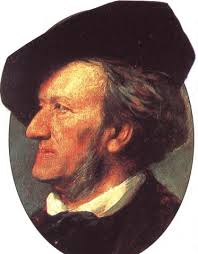
Conversation with a Listener. Brahms vs. Wagner


Last week I received a series of emails from a listener inquiring about the difference between Brahms and Wagner. I thought it would be interesting to share these postings with you. The listener will remain anonymous out of respect for his privacy.


Sent:  Saturday, January 12, 2013

Mr. Hessler,

The Oxford Dictionary of Music says Peter Tchaikovsky did not succumb to the influence of either Brahms or Wagner. Was there a great controversy at the time concerning music theory? If so, what was Brahms’ theory and what was Wagner’s.

A Listener


Sent: Monday, January 14, 2013

Dear Listener,

To put it simply, there were two warring musical camps at the end of the nineteenth century. One admired Brahms for applying the style of the Romantic era to the traditional forms and harmonic and contrapuntal techniques of the Baroque and Classical eras, the other championed Wagner for creating the “music of the future” with experimental harmonies and structures.

Yours truly,

Reed Hessler


Sent: Friday, January 18, 2013

Thank you so much!

Can you give me an example of Wagner using “experimental harmonies and structures”? (If not, don’t bother. You have already helped me tremendously.)

A Listener


Sent: Monday, Janaury 21, 2013

Always a challenge to explain complex issues briefly! Wagner used what  are known as “chromatic” harmonies. For example, in traditional Western music, if you are in the key of C major, and play a G major chord at the end of a musical phrase, it must resolve to a C major chord on the final note of that phrase. Wagner avoided traditional resolutions, so the G major chord at the end of a phrase might lead, let’s say, to a C-sharp major chord, which would continue into another musical phrase. The effect is disconcerting, but also very emotionally stirring. But not only that, musical phrases tend to be grouped into symmetrical numbers of bars: like eight bars, sixteen bars, etc. (A “bar” of course, is a rhythmic division: like, ONE-two-three-four, TWO-two-three-four, THREE-two-three-four, would be three “bars”.) Wagner would allow musical phrases to continue indefinitely. Nor would he use an overall structure for a movement, like sonata form for instrumental works, or aria da capo form for songs (think of aria da capo as a verse, followed by a contrasting break, concluding with a repetition of the opening verse), making the musical structure freer. This is not to say that composers like Brahms (or Beethoven, or Mozart, or Bach) did not experiment with harmony and structure themselves. They most certainly did. But they broke the rules (ingeniously, I would say) within the context of the old structures: some vestige of it would remain. Wagner pushed it as far as it could go. He would “imply” harmonic resolutions and musical structures without observing them. The next step would be the totally atonal music of the twentieth century. As I said at the start, this is a very brief explanation of a much more complex subject.

Yours truly,

Reed Hessler


Sent: Thursday, January 24, 2013

Thank you very much. You did a wonderful job of explaining it.

A Listener


Those viola jokes…

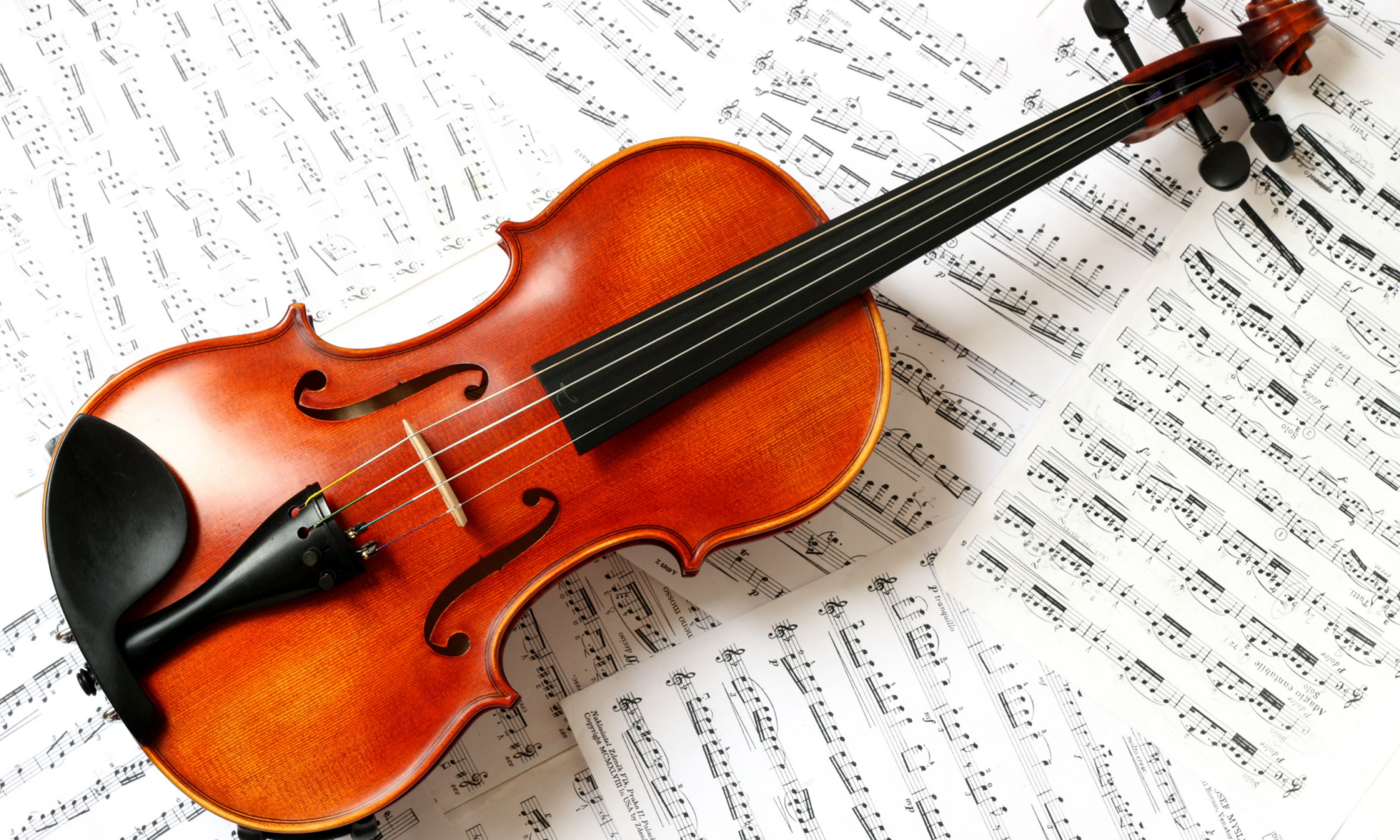
What is the longest viola joke?
Harold in Italy.

Okay, this one is quite funny, but for the most part I just don’t get the plethora of viola jokes. I mean, I get them, but I don’t understand why violas are the butt of the dumb blonde jokes of the music world. The viola has such a beautifully mellow tone and it does such a great job of filling out the middle voice of a piece of music. After all, Beethoven, Brahms, Mozart, Dvorak and many others thought highly enough of the viola to make it the additional instrument in their string quintets; Schumann wrote his exquisite Märchenbilder (Fairy Tale Pictures) for viola; Brahms made a viola version of his two Clarinet Sonatas; there’s Mozart’ Sinfonia Concertante; there’s Walton’s Viola Concerto, and so the list goes on.

I’ve been thinking about this since hearing the Brentano String Quartet open the Shriver Hall Concert Series last Sunday evening. From the opening Haydn Quartet, I kept finding my ear being drawn to the viola part, beautifully played by Misha Amory. It’s not that he drew attention to himself—not at all—but the viola lines were just so clear and added such depth to the inner workings of the music. It turns out Misha has stellar credentials; he holds degrees from Yale University and the Juilliard School and now serves on the faculties of the Juilliard and the Curtis Institute. But it’s more than just that. There is an innate musicality and sensitivity to his playing that helps to bind the whole quartet together.

Incidentally, Misha is married to the violist, Hsin-Yun Huang, so they have quite a little viola cottage industry going there—good luck to them!


Top 5

WBJC’s web maestra, Diana Ross, has suggested that we blog about a Top 5 list of some kind, so here I go with my top 5 favorite instruments:
Cello, because it sounds so luscious and sonorous. It has its limitations, to be sure—the cellists can’t stand for the National Anthem at the opening of the arts seasons, for instance, and cellos are not so good for marching bands, as Woody Allen famously and hilariously demonstrated in his movie, “Take the Money and Run.”
French Horn. I have always liked it because, like the cello, it has a warm and mellow sound, and I came to love it when I married my horn playing husband. Over the years I have learned to listen for the horn solos in symphonic works, thanks to him. Think of the slow movement of the  1st serenade by Brahms or the opening solo from Tchaikovsky’s 2nd symphony, for instance–but there are countless examples. (As a side bar, aren’t we lucky to have Phil Munds as the 1st horn of the Baltimore symphony? He wouldn’t know a flubbed note if he fell over it.)
Piano, for the repertoire—what more need I say?
Oboe, especially as a symphonic instrument. I like how the pitch of the whole orchestra hangs on it, for one thing. Its slightly plaintive sound always adds an intriguing musical texture to an orchestral or a chamber ensemble, I think.
The Voice. There is an element of the subjective here because, although I studied cello, voice was my main instrument in the days when I used to make music and not just talk about it. There is something quite magical in the way voices blend—whether it is in an a cappella choir, the tenor and baritone duet in Bizet’s “Pearl Fishers” or the heart stopping trio of the three women’s voices in the last act of Richard Strauss’s “Der Rosenkavalier”—to  say nothing of what Mozart and Verdi achieved.

Wednesday 08/22/12 Live! At The Concertgebouw

11:00 PM

Conductor:  Etienne Siebens
Pianist: Ralph van Raat
Netherlands Philharmonic Orchestra

Lex van Delden: Symphony No. 3
Henriëtte Bosmans: Concertino for piano and orchestra
Jan van Gilse: Symphony No. 1 in F major

Fill:
Brahms: Piano Trio No. 2 in C major, Op. 87
Jan van Gilse: Overture in C

Sir Simon in Philly

Despite the fact that they are emerging from chapter 11 bankruptcy, the Philadelphia Orchestra is still playing away and able to attract top notch conductors.  They were led by Sir Simon Rattle this past weekend, including a performance at Carnegie Hall in New York.  I went up to Philly to hear them in their home at the Kimmel Center yesterday.  It’s actually the second time I’ve heard Rattle conduct them there; the first time was a sublime performance of Schubert’s Great Symphony, which I wished would never come to an end.  (I don’t know if you’ve ever been to the Kimmel Center but I have to say I find it rather uninviting.  I’m no architect, but it seems to me to be the most peculiar conglomeration of styles.  Everything is housed in a big glass dome, inside of which is a round, stone chamber hall; stuck off to the side is a kind of tacked on art gallery; there are refreshment centers dotted about seemingly at random; and the main auditorium itself is a big wooden box.  Once inside, the auditorium has a surprisingly warm and intimate feel, and the experience improves, I’m happy to say.)

In any event, the concert yesterday paired Brahms’s Symphony No. 3 and Schumann’s Symphony No. 3, with Anton Webern’s Six Pieces for Orchestra sandwiched in between.  Rattle is a great champion of contemporary music (I use the term even though Webern’s pieces were composed over a hundred years ago, in 1909!) and he made the Six Pieces much more lucid than I feared they might be.  Perhaps I might even be brave enough to program them some day.  It was curious to me that Rattle opened the program with the Brahms and ended with the Schumann, given that the Schumann was written first, and Brahms quoted from it, but both were, needless to say, beautiful readings.  The Brahms especially was gorgeous and lush and detailed and nuanced.

The orchestra is poised to welcome their new Music Director, the 37 year old Canadian, Yannick Nézet-Séguin, in September and I hope that will be a wonderful new chapter (no pun intended) for them.  It seemed to me that they were a little bruised and had lost some of the gloss that has positioned them as one of the top five great American orchestras for decades.  The strings are still strong and have a wonderful sheen (the cellos, I thought, were particularly strong) but some of the brass playing was shy of the legendary status one has come to expect from that orchestra.  Still, they clearly love working with Rattle (I watched a second violinist just sitting there looking at him when we was not actually playing) and one can’t help but dream of what might have been if Sir Simon had accepted their offer to become their Music Director instead of holding out for the position at the Berlin Philharmonic, where he now is.

He conducted both symphonies from memory, and he is a tremendously engaged conductor.  Of course, one expects any conductor to be so, but he seems to communicated the music very intensely through his body and his facial expressions.  And the orchestra is intensely responsive to him.  At the opening of the slow movement for the Brahms, for instance, I watched the pulse of his left hand being immediately transformed into a shift of nuance from the orchestra.  Rattle is self effacing on the podium (perhaps some of the British restraint?) but there is no doubt why he is considered one of the great conductors today.  It’s thrilling to watch him make music.