The holiday season is here and Hampton National Historic Site is getting ready for its annual celebration. I recently spoke with Board Member Gayle Economos about Holidays at Hampton 2024.



Maryland's All-Classical Music Station
The holiday season is here and Hampton National Historic Site is getting ready for its annual celebration. I recently spoke with Board Member Gayle Economos about Holidays at Hampton 2024.
Back in 1814, Baltimore found itself under threat of invasion from British troops. Ordinary citizens teamed up forces with the military to defend and protect the city. I spoke with Ranger Ray Snyder about this year’s Defenders’ Day celebrations at Fort McHenry and beyond.


Hampton National Historic Site is preparing for the holiday season once again. Their day-long 2023 celebration, Holidays at Hampton, will start the festivities on Saturday, December 9. I recently spoke with Historic Hampton board member Gayle Economos about this year’s featured activities and performances.


Fort McHenry’s Defenders’ Day celebration will take place Friday and Saturday, September 17 and 18. Various activities are planned including a parade, musical performances, and living history re-enactors. I spoke with Ranger Shannon McLucas about this year’s remembrance of an important period in Baltimore’s history.

My husband and I are outliers in a number of ways, one of which is that we still dress up when we go to the theater or the opera. We’re both vintage enthusiasts as well and enjoy researching the proper attire for a particular era when we attend “period” (usually 1920’s) events. Well, we did, when going out was an option, and we can’t wait until it’s safe to do those things again.
Fans of Edith Wharton may recall that in The Age of Innocence, Ellen Olenska declines a last-minute invitation to the Old Met because she doesn’t think her dress is appropriate. Back in the day, dressing formally for the opera was not a matter of personal choice, as it is now – it was de rigueur. Certain evening clothes and accessories became popular because they looked great as one swanned around the lobby or checked out the occupants of the other boxes through – you guessed it – opera glasses. Some of these resembled miniature binoculars, while others were the lorgnette style – small spectacles attached to a folding handle or worn on a chain. They were made in a variety of materials, from enameled base metal to gold or silver set with gemstones.
Opera gloves were an essential part of a Victorian lady’s formal theater-going outfit and remained popular for many years. They are still worn by some brides, prom-goers, and gala attendees today. The most recognizable style of opera gloves is the mousquetaire – the long, over the elbow type with buttons near the wrist to allow the wearer to eat or drink without removing the gloves entirely. (Having sported this type of gloves on a few special occasions, I’d add that the greatest challenge in wearing them is often keeping them buttoned when you’re not at dinner!) They were usually made of silk or kidskin leather.
Of course, a woman attending the opera wouldn’t want to top off her Worth gown (or in later decades, her Lucille, Schiaparelli, or Balenciaga) with everyday outerwear. Nor would a gentleman finish off his top hat and tails with a casual coat. As such, the opera cloak was born! Men’s and women’s opera cloaks date back to the 1840’s and were made of flamboyantly colored silk or velvet, often trimmed in fur. As the Victorian era progressed, men’s formal cloaks were typically black, floor length, and fastened at the neck. Women’s opera cloaks and coats also came in black, although colorful ones remained in vogue as well. My personal favorites are the 1920’s and 1930’s silk velvet styles, which are quite collectible and continue to inspire designers today.
The opera hat, or top hat, as it’s now more commonly known, was invented in the 19th century. A London hatter named Thomas Francis Dollman came up with the brilliant idea of creating a collapsible top hat that could easily be stored under one’s theater seat or in the cloak room. These hats were made of the finest silk, so they didn’t come cheap, which made them an aspirational fashion purchase for men in the growing middle class.
Even jewelers got in on the act and gave certain pieces theatrical names that are still in use. These days, a matinee length pearl necklace is typically 20-24 inches long, while an opera length strand is 26-35 inches. My own opera length pearls are about 28 inches long as there are only 63 inches of me.
Back when far more people smoked, even cigarette holders were made in formal styles and lengths considered appropriate for elegant occasions. If you’ve seen Breakfast at Tiffany’s, or just a certain famous photograph of Audrey Hepburn, you’ve seen an opera length cigarette holder. They typically ranged from 16 to 20 inches long! Shorter theater length holders were also made in 10 to 14 inch styles. These were marketed to women; men’s cigarette holders generally didn’t exceed 4 inches in length. Some were made of affordable materials like Bakelite, but they could also be found in gold, silver, and ivory, embellished with precious or semi-precious stones. Plain or fancy, cigarette holders served a number of practical purposes, including reducing the amount of staining to a smoker’s teeth and keeping ashes off of one’s clothing. It must have required quite a bit of grace and poise to keep from getting ash on others when wielding a lit cigarette in a 20-inch holder while navigating a crowded theater lobby. The original social distancing tool, perhaps?

Baltimore actress Kay-Megan Washington has scored something most performers only dream about – a major role in a movie! “The Christmas Lottery” begins airing on BET, BET Her, and streaming services on December 12. Ms. Washington is a fabulous singer-actress and I recently spoke with her about her role as the family matriarch as well as what types of music bring her joy.

Engaging with music, whether that means listening to it or performing it, has been shown to have numerous health benefits including stress reduction, improved cognition, reduced anxiety, and elevated moods. Artistic Director Jeanne Kelly founded Encore Creativity for Older Adults in 2007 to give singers age 55 and older a chance to perform music that’s carefully selected to make them sound great. Encore’s operations have been greatly affected by COVID-19, but starting July 6, they’re offering “Encore University – Summer School” online to give singers a chance to learn about genres including classical, jazz, rock, and Motown as well as opportunities to improve vocal technique and other skills. Earlier this week, I spoke with Ms. Kelly about Encore’s mission and the importance of staying connected.


Okay, OUR new colleagues. WBJC’s on-air personnel are the only humans coming to work at this point, but we have some exciting new staff members who have been working super hard to keep us all safe. Aren’t they photogenic? They get quite a workout several times a day disinfecting countertops, door handles, the sound board, phones, and other equipment.

We’re not taking COVID-19 lightly around here. The office staff is working from home, or WFH, as it’s often abbreviated online, and the announcers are scrupulously observing the “6-foot rule” while we’re here. We’ve had a number of kind and supportive Facebook messages, emails, and phone calls from listeners thanking us for being here, but hey, it’s what we do! We’re always glad to be here for you, now more than ever.
At home, my husband and I have been making the best of the situation – going running together in the morning, re-bingeing “Boardwalk Empire”, and spending a lot of time snuggling our cats, Fabrizio and Ava. I’ve been working on a sewing project or two – trying very hard to “stash bust” rather than succumbing to online fabric and pattern store temptations – and have gotten reasonably good at making homemade soup stock since that’s been one of the harder-to-find grocery items lately. We’re trying to limit our takeout orders as we’d like to come out of this a bit thinner, or at least the same size, but we also want to support beloved local restaurants.
Music has always been tremendously important in my life. When I was a kid, my family took a lot of road trips, and the radio was always on, or if the reception was spotty, my parents would pop an 8-track tape (remember those?) into the car stereo. At home, I had my own collection of 45s and LPs from an early age and also made off with my older sister’s records when she was out with friends. As technology moved on, so did I, to cassettes, CDs, and various portable devices that could play them. Music is a friend – a source of comfort, wit, joy, and so much more – that’s never let me down. I hope WBJC’s programming always meets your needs, but especially now. If you’ve heard something on the station that’s meant a lot to you recently, we’d love to know what it was. Thanks again for your kind words and support. Please stay safe and stay tuned!

The holiday season is almost upon us, so of course that means choral concerts, especially Handel’s Messiah. Recently, I spoke with Columbia Pro Cantare’s Executive Director, Elladean Brigham, about the group’s upcoming performance of the famous work as well as their Chamber Chorus seasonal offering, A Christmas Noel.
On almost any given day, if you were to stop by WBJC’s studios, you’d hear someone mention food. The staff at this radio station loves to natter on about all things culinary – favorite cookbooks, silly food trends, amazing (or dreadful) restaurants we’ve recently tried – if you can eat it or drink it, we’ve probably discussed it at work. There’s only one other non-musical topic that seems to surface as frequently as comestibles around here: cats!

As such, it was only a matter of time before my thoughts turned to the relationship between food and classical music. I was aware that various savories and sweets are named for composers and performers: Tetrazzini (turkey, chicken, or, most appealing to me, lobster,) Tournedos Rossini, Peach Melba, and Mozartkugeln, to name a few. Berlioz, Bizet, and Rossini all have egg dishes named after them, and then there are obscurities such as Caruso Sauce and Chaliapin Steak. But what foods have performers and composers truly been fond of over the years? Did any of them have eating habits we might consider odd?
Not too surprisingly, Erik Satie had an interesting culinary quirk: he claimed he only ate white foods, which he described as “eggs, sugar, grated bones, the fat of dead animals; veal, salt, coconut, chicken cooked in white water; fruit mold, rice, turnips; camphorated sausage, dough, cheese (white), cotton salad, and certain fish (skinless).” Eccentric, yes, but pretty much what one would expect from a composer who gave performance instructions such as “wonder about yourself”, “light as an egg”, and “like a nightingale with a toothache.” Still, I shudder to think of the condition of Monsieur Satie’s digestive system and suspect that his dinner parties, if he gave them, were sparsely attended.

Bela Bartok apparently delighted in discovering new foods and would either discuss them at great length with his dining companions – how very WBJC of him – or take elaborate notes on what he’d eaten. After he and his wife moved to America in 1940, Bartok was served his first avocado in a version of Waldorf salad. “This is a fruit somewhat like a cucumber in size and colour,” he wrote. “But it is quite buttery in texture, so it can be spread on bread. Its flavour is something like an almond but not so sweet. It has a place in this celebrated fruit salad which consists of green salad, apple, celery, pineapple, raw tomato and mayonnaise.” (Author’s note: Waldorf salad has never appealed to me and this particular version sounds horrific!)

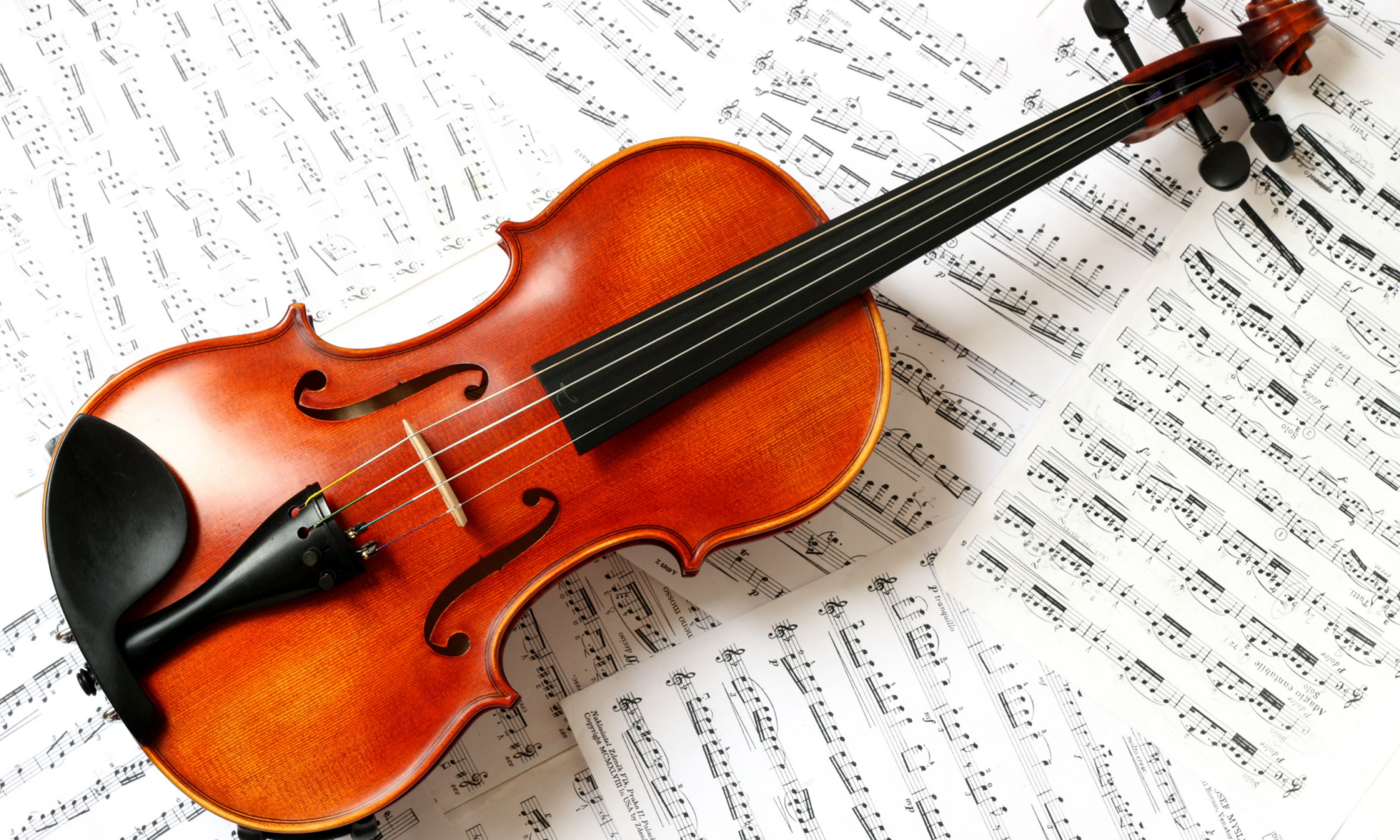
Widely considered the greatest violin virtuoso of his time, Niccolo Paganini had an international touring career and thus was able to sample the cuisines of all the major European capitals. This must have been quite a treat for Paganini, who went without food at times during his childhood. It seems family finances weren’t the issue; rather, Paganini’s father forced him to practice mandolin, and later violin, from dawn til dusk; if the boy’s energy or concentration flagged, he received no meals. As an adult, Paganini made up for the deprivation of his youth by cooking. His ravioli recipe – which incorporates veal, beef, Lugano sausage, and calf’s brain, among other things – can be found in the Library of Congress, in his own hand. Judging from the condition of the recipe, Paganini was a much neater chef than many of us.


Knowing that Handel adored wine, a Duke once sent him a brace of pheasant and an excellent bottle of port the very same day the composer was to host a dinner party. During the meal, Handel repeatedly excused himself from the table, saying that he needed to write down a bit of musical inspiration in the next room. After a while, one of the guests, a Mrs. Anne Dewes, noted that a member of the party could no longer contain his curiosity and peeked at the maestro through the keyhole. He found Handel secluded not with the Muse, but rather with liquid portion of the Duke’s gift.

If you have a favorite music-inspired dish or drink, we’d love to hear about it!