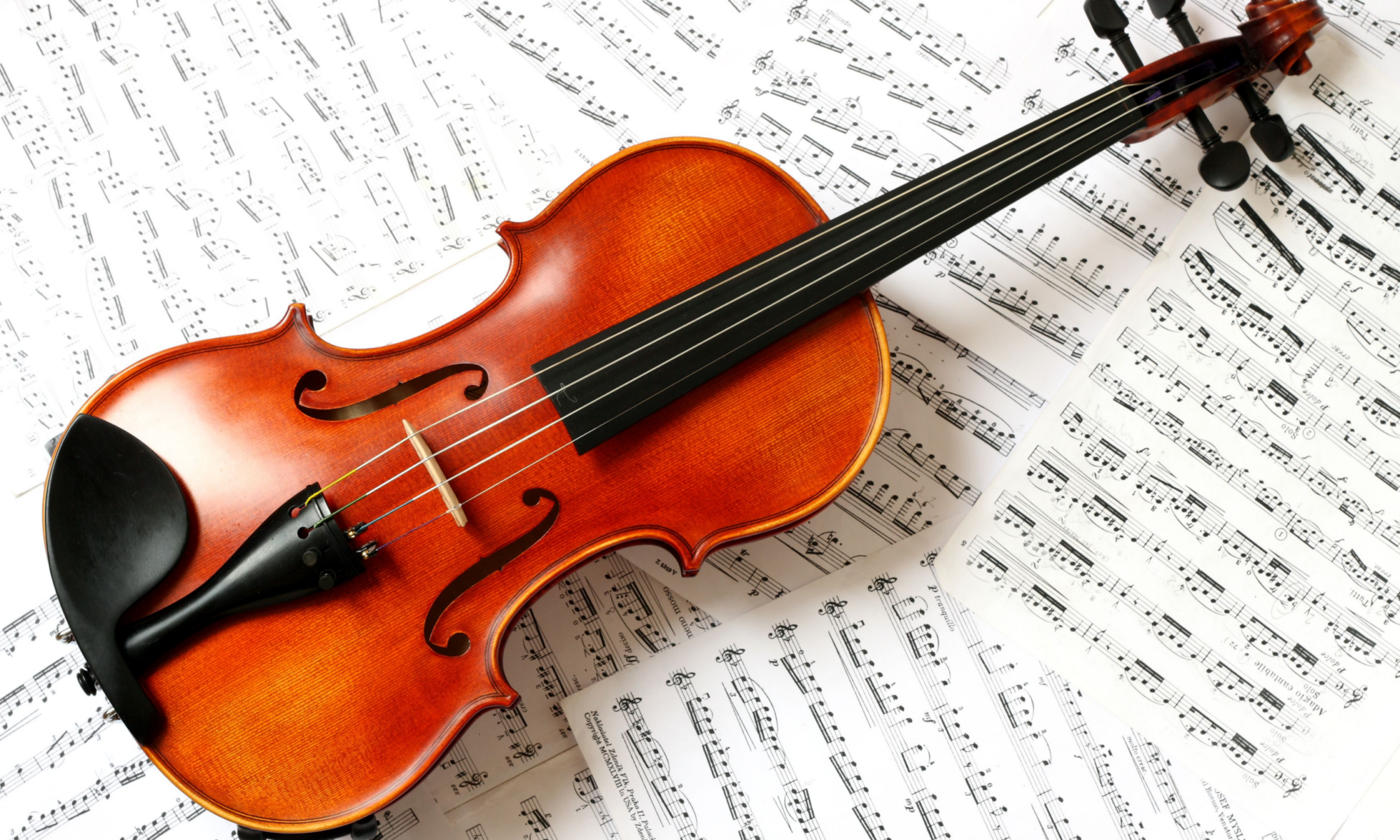

If music be the food of love, what’s the food of music?

On almost any given day, if you were to stop by WBJC’s studios, you’d hear someone mention food. The staff at this radio station loves to natter on about all things culinary – favorite cookbooks, silly food trends, amazing (or dreadful) restaurants we’ve recently tried – if you can eat it or drink it, we’ve probably discussed it at work. There’s only one other non-musical topic that seems to surface as frequently as comestibles around here: cats!

As such, it was only a matter of time before my thoughts turned to the relationship between food and classical music. I was aware that various savories and sweets are named for composers and performers: Tetrazzini (turkey, chicken, or, most appealing to me, lobster,) Tournedos Rossini, Peach Melba, and Mozartkugeln, to name a few. Berlioz, Bizet, and Rossini all have egg dishes named after them, and then there are obscurities such as Caruso Sauce and Chaliapin Steak. But what foods have performers and composers truly been fond of over the years? Did any of them have eating habits we might consider odd?

Not too surprisingly, Erik Satie had an interesting culinary quirk: he claimed he only ate white foods, which he described as “eggs, sugar, grated bones, the fat of dead animals; veal, salt, coconut, chicken cooked in white water; fruit mold, rice, turnips; camphorated sausage, dough, cheese (white), cotton salad, and certain fish (skinless).” Eccentric, yes, but pretty much what one would expect from a composer who gave performance instructions such as “wonder about yourself”, “light as an egg”, and “like a nightingale with a toothache.” Still, I shudder to think of the condition of Monsieur Satie’s digestive system and suspect that his dinner parties, if he gave them, were sparsely attended.

Bela Bartok apparently delighted in discovering new foods and would either discuss them at great length with his dining companions – how very WBJC of him – or take elaborate notes on what he’d eaten. After he and his wife moved to America in 1940, Bartok was served his first avocado in a version of Waldorf salad. “This is a fruit somewhat like a cucumber in size and colour,” he wrote. “But it is quite buttery in texture, so it can be spread on bread. Its flavour is something like an almond but not so sweet. It has a place in this celebrated fruit salad which consists of green salad, apple, celery, pineapple, raw tomato and mayonnaise.” (Author’s note: Waldorf salad has never appealed to me and this particular version sounds horrific!)

Widely considered the greatest violin virtuoso of his time, Niccolo Paganini had an international touring career and thus was able to sample the cuisines of all the major European capitals. This must have been quite a treat for Paganini, who went without food at times during his childhood. It seems family finances weren’t the issue; rather, Paganini’s father forced him to practice mandolin, and later violin, from dawn til dusk; if the boy’s energy or concentration flagged, he received no meals. As an adult, Paganini made up for the deprivation of his youth by cooking. His ravioli recipe – which incorporates veal, beef, Lugano sausage, and calf’s brain, among other things – can be found in the Library of Congress, in his own hand. Judging from the condition of the recipe, Paganini was a much neater chef than many of us.

Knowing that Handel adored wine, a Duke once sent him a brace of pheasant and an excellent bottle of port the very same day the composer was to host a dinner party. During the meal, Handel repeatedly excused himself from the table, saying that he needed to write down a bit of musical inspiration in the next room. After a while, one of the guests, a Mrs. Anne Dewes, noted that a member of the party could no longer contain his curiosity and peeked at the maestro through the keyhole. He found Handel secluded not with the Muse, but rather with liquid portion of the Duke’s gift.

If you have a favorite music-inspired dish or drink, we’d love to hear about it!


Dear Lexus: What Did Mozart Ever Do To You?

According to a recent Lexus ad,  it’s just not hip to listen to classical music while driving, especially Mozart. But it is hip to be rude and leave three passengers stranded on a country road. Doing so will make you appear much younger and cooler, especially if you’re listening to generic electronic pop music while you drive away!

http://www.youtube.com/watch?feature=player_embedded&v=hkFC05bTXso

In all seriousness, I’m quite mystified as to the intended audience for this spot, as was Jonathan Palevsky when I showed it to him yesterday. Is Lexus hoping to appeal to young car buyers? Given that the model in this video, the 2015 NX, has a base price of $34,480,  we wish them luck. Not many younger consumers have that kind of money to spend on a car these days. My suspicion is that Lexus is trying to convince its core customer base – which, based on my observation of those who drive their vehicles, is people, er, my age and up –  that their cars are cool, not stuffy. Problem is, that’s also the demographic most likely to support classical music by going to concerts, buying recordings, and, oh, yes, being members of certain public radio stations.

As offensive as this ad is, it’s also laughable on some levels. First, the Mozart sounds, as Norman Lebrecht of Slipped Disc said, “doctored and slightly speeded up to make it sound glassy and repulsive.” The actor in the driver’s seat isn’t young, and not particularly hip-looking, either. He’s also got a pretty mean-spirited gleam in his eye as he kicks the string trio out of his car. Finally, the pop music that comes out of the Lexus’ sound system in place of the Mozart is so generic that it wouldn’t be at all out of place in an elevator or as telephone “hold” music. The message I took away from it was “drive this vehicle and you, too, can be a middle-aged person with terrible manners, pedestrian fashion sense, and appalling taste in music.” Not exactly the sort of thing that’s going to send me running out to buy a car, or anything else, for that matter.


Did he do it?

Peter Shaffer has a lot to answer for. Thanks to him, we now link Antonio Salieri’s name to Wolfgang Amadeus Mozart’s as someone who somehow had a hand in Amadeus’s downfall and death. It’s true that when Mozart first arrived in Vienna from Salzburg, Antonio Salieri was so well established as a court musician for the Hapsburgs that sought-after positions went to him instead of to the young Mozart. Towards the end of Mozart’s life, though, there is documented evidence of their social and professional contact – they even collaborated on a work together – and Salieri was entrusted with the musical education of Mozart’s son; hardly the kind of exchange one would expect from somebody who wished Mozart harm.

Rumors of Salieri’s nefarious behavior began to circulate not long after Mozart’s death. By 1832, a singspiel about Mozart’s life hinted at Salieri’s jealousy of Mozart. That same year, Alexander Pushkin published a poetic drama on the theme, and the 1897 opera by Nikolai Rimsky-Korsakov, Mozart and Salieri, suggests that Salieri poisoned Mozart out of jealously. So, Peter Shaffer is not the only one – but his Amadeus is certainly the version that has caught the imagination the most powerfully. And so it should; it is a work of art.

The production of Shaffer’s Amadeus at Center Stage is the third stage production I have seen (aside from the compelling Milos Forman/F. Murray Abraham/Tom Hulce film version) and by any standards it is superb. Artistic Director, Kwame Kewi-Armah’s direction is so seamless that it comes across as inevitable. The ensemble – from the whispering gossips (Lucia Spina and Jay Russell) to Constanza (Kayla Ferguson) to Emperor Joseph II (Keven Orton) – is uniformly strong. But it is the pivotal roles of Salieri (Bruce Nelson) who is forced to face his own mediocrity because only he has the ears to hear the divine gift of Mozart, and Mozart himself (played to brilliant affect by Stanton Nash as an individual with attention deficit disorder) that are electrifying. The synergy they create on stage is so strong that, by the end of the play, you have forgotten about the actors, and are completely absorbed in the unfolding dynamic between these two composers.

Mozart’s music and compelling theatre – what better combination? Amadeus is on at Center Stage until Sunday, October 12th.Amadeus_CS_2014b

Affairs Of Notes – And Words, Too!

This coming Sunday, November 18th, Pro Musica Rara will present Love Letters from the Eighteenth Century at Towson University’s Center for the Arts.  PMR’s Artistic Director Allen Whear did painstaking research into the correspondence and personal lives of some Enlightenment-era notables for this program; you can listen to our interview by clicking on the link below.

PMR’s Love Letters From The 18th Century


A Legendary “Lover” at the Lyric

The notorious libertine Don Giovanni (or Don Juan) has inspired authors and composers since at least the seventeenth century. This weekend, Peabody Opera Theater brings Mozart’s operatic retelling of the infamous womanizer’s exploits to the Patricia and Arthur Modell Performing Arts Center at the Lyric. Stage director Roger Brunyate says Don Giovanni is his favorite opera – click below to find out why!

Peabody Opera Theater’s “Don Giovanni” at the Lyric


Thursday 11/15/12 The Cleveland Orchestra

11:00 PM

Pierre-Laurent Aimard, piano and conductor (Schoenberg and Mozart)
Tito Muñoz, conductor (Stravinsky)
The Cleveland Orchestra Chorus

SCHOENBERG:  Three Piano Pieces, Op. 11 (for solo piano)
MOZART: Piano Concerto No. 18 in Bb, K. 456
STRAVINSKY: Symphonies of Wind Instruments (original version, 1920)
STRAVINSKY: Symphony of Psalms (1948 revision)

Encore:
Ravel: Rhapsodie Espagnole


Those viola jokes…

What is the longest viola joke?
Harold in Italy.

Okay, this one is quite funny, but for the most part I just don’t get the plethora of viola jokes. I mean, I get them, but I don’t understand why violas are the butt of the dumb blonde jokes of the music world. The viola has such a beautifully mellow tone and it does such a great job of filling out the middle voice of a piece of music. After all, Beethoven, Brahms, Mozart, Dvorak and many others thought highly enough of the viola to make it the additional instrument in their string quintets; Schumann wrote his exquisite Märchenbilder (Fairy Tale Pictures) for viola; Brahms made a viola version of his two Clarinet Sonatas; there’s Mozart’ Sinfonia Concertante; there’s Walton’s Viola Concerto, and so the list goes on.

I’ve been thinking about this since hearing the Brentano String Quartet open the Shriver Hall Concert Series last Sunday evening. From the opening Haydn Quartet, I kept finding my ear being drawn to the viola part, beautifully played by Misha Amory. It’s not that he drew attention to himself—not at all—but the viola lines were just so clear and added such depth to the inner workings of the music. It turns out Misha has stellar credentials; he holds degrees from Yale University and the Juilliard School and now serves on the faculties of the Juilliard and the Curtis Institute. But it’s more than just that. There is an innate musicality and sensitivity to his playing that helps to bind the whole quartet together.

Incidentally, Misha is married to the violist, Hsin-Yun Huang, so they have quite a little viola cottage industry going there—good luck to them!


Top 5

WBJC’s web maestra, Diana Ross, has suggested that we blog about a Top 5 list of some kind, so here I go with my top 5 favorite instruments:
Cello, because it sounds so luscious and sonorous. It has its limitations, to be sure—the cellists can’t stand for the National Anthem at the opening of the arts seasons, for instance, and cellos are not so good for marching bands, as Woody Allen famously and hilariously demonstrated in his movie, “Take the Money and Run.”
French Horn. I have always liked it because, like the cello, it has a warm and mellow sound, and I came to love it when I married my horn playing husband. Over the years I have learned to listen for the horn solos in symphonic works, thanks to him. Think of the slow movement of the  1st serenade by Brahms or the opening solo from Tchaikovsky’s 2nd symphony, for instance–but there are countless examples. (As a side bar, aren’t we lucky to have Phil Munds as the 1st horn of the Baltimore symphony? He wouldn’t know a flubbed note if he fell over it.)
Piano, for the repertoire—what more need I say?
Oboe, especially as a symphonic instrument. I like how the pitch of the whole orchestra hangs on it, for one thing. Its slightly plaintive sound always adds an intriguing musical texture to an orchestral or a chamber ensemble, I think.
The Voice. There is an element of the subjective here because, although I studied cello, voice was my main instrument in the days when I used to make music and not just talk about it. There is something quite magical in the way voices blend—whether it is in an a cappella choir, the tenor and baritone duet in Bizet’s “Pearl Fishers” or the heart stopping trio of the three women’s voices in the last act of Richard Strauss’s “Der Rosenkavalier”—to  say nothing of what Mozart and Verdi achieved.